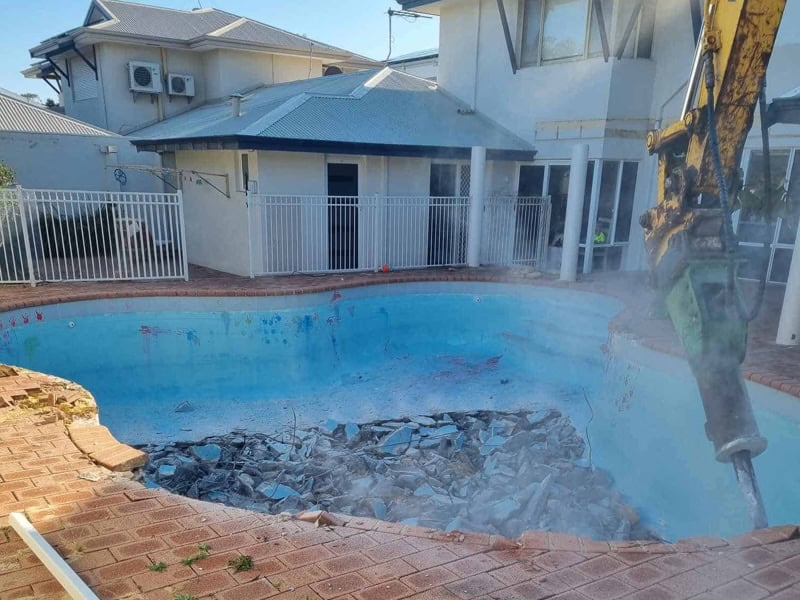
A swimming pool is an expensive investment. They require constant maintenance and upkeep, which means ongoing costs every year.
They can be a great feature, but they cost money every single month, demand constant attention, and often become one of the more stressful parts of owning a property.
If you’re debating whether or not to keep your swimming pool or to remove it, there are plenty of things to consider. In this article, we discuss what it actually costs to keep your pool running and the benefits of removing it.
The Real Cost of Running a Pool
The annual cost of basic upkeep can be steep. This isn’t even including repairs or equipment failures. Just the routine cost of keeping the water clean and the system functioning. The main costs, on average, include:
Chemicals: Chlorine, pH balancers, algaecides and shock treatments together run between $100 and $800 per year for a standard-sized pool. Any mistakes also mean you’re buying more product to correct them.
Electricity: Pool pumps run for hours every day, and if you have a heater or automated cleaning system, the draw adds up quickly. Monthly electricity costs for a pool typically fall between $50 and $150. Older equipment also runs less efficiently than modern equipment, which means a higher cost. Having a heater also drives this cost up.
Water: Evaporation drains a pool by several centimetres each week during summer. Factor in splash loss and the occasional leak, and depending on the size of your pool, you can lose up to 120L of water a day.
Cleaning: Even with a robotic cleaner, filters need replacing, pumps need servicing, and baskets need regular clearing.
Insurance: Having a pool quietly inflates your insurance premiums and locks you into ongoing compliance obligations under WA regulations. Safety barriers, self-closing gates and regular inspections are all required, and older pools frequently fail to meet current standards. Getting one up to code costs money, and ignoring it can result in fines.
Higher Costs for Older Swimming Pools
As pools get older, their components age with them. A pump that’s been running for ten years is working harder than a new one to achieve the same output, which means higher electricity consumption and a greater chance of failure. A degraded filter forces the pump to compensate, reduces water clarity and demands more chemical intervention to keep the water safe.
Then there’s the structural aspect. Rough plaster, loose or cracked tiles, blistered or faded fibreglass can all end up causing structural damage if left alone. These expenses often arrive unexpectedly, and they stack up on top of your regular maintenance costs in whatever order the equipment decides to give out.
What Swimming Pool Removal Actually Does to Property Value
The assumption is that a pool increases property value, so removing it must subtract value. The reality is more specific than that.
A pool in good condition can, in specific conditions, add somewhere between 7-10% to a home’s value. But that figure depends entirely on
- The pool’s condition,
- The size of the block,
- The suburb’s buyer demographic,
- Whether the cost of installation can realistically be recovered in the sale price.
A deteriorating pool on a small block in an area popular with demographics like investors or retirees can actually decrease property value.
If the pool takes up more than 30% of the yard, this can be undesirable to many buyers. Removal opens the block up in a way that appeals to a much wider range of buyers. Families with young children, buyers looking for entertaining space, and investors who want to add a granny flat or secondary dwelling all benefit directly from that recovered space.
In many WA suburban properties, the pool footprint is the only place a secondary dwelling could physically fit. Removing a pool and building a granny flat can add significantly more value and rental yield than a swimming pool.
A pool that is non-compliant with current WA safety fencing regulations, or that has visible structural leaks or surface damage, is a documented liability in any sale. Buyers will either walk, negotiate the price down substantially, or make the sale conditional on the issue being resolved. Removing it before listing eliminates that pressure entirely and broadens your buyer pool.
So, Is Swimming Pool Removal Worth It?
Post removal, every ongoing cost associated with the pool, like chemicals, electricity, equipment costs, etc., all stop. Those savings typically recover the cost of removal within a few years. Beyond the money, you get usable space back. Whether that becomes an entertaining area, a lawn, room for a granny flat or just a backyard that requires far less maintenance, the change is tangible. For households with young children, the backyard becomes safer as well.
If your pool is old, underused or in a condition that makes it a liability rather than an asset, swimming pool removal could be a great solution. We handle the removal and excavation work, including the break-up of the pool structure, material removal, backfilling, compaction and site restoration. If you want to know what removal would cost for your property and what bobcat hire involves, get in touch today.